2026-09-04 · Tom Harlan
Sump Pump Running Constantly? What That Usually Means
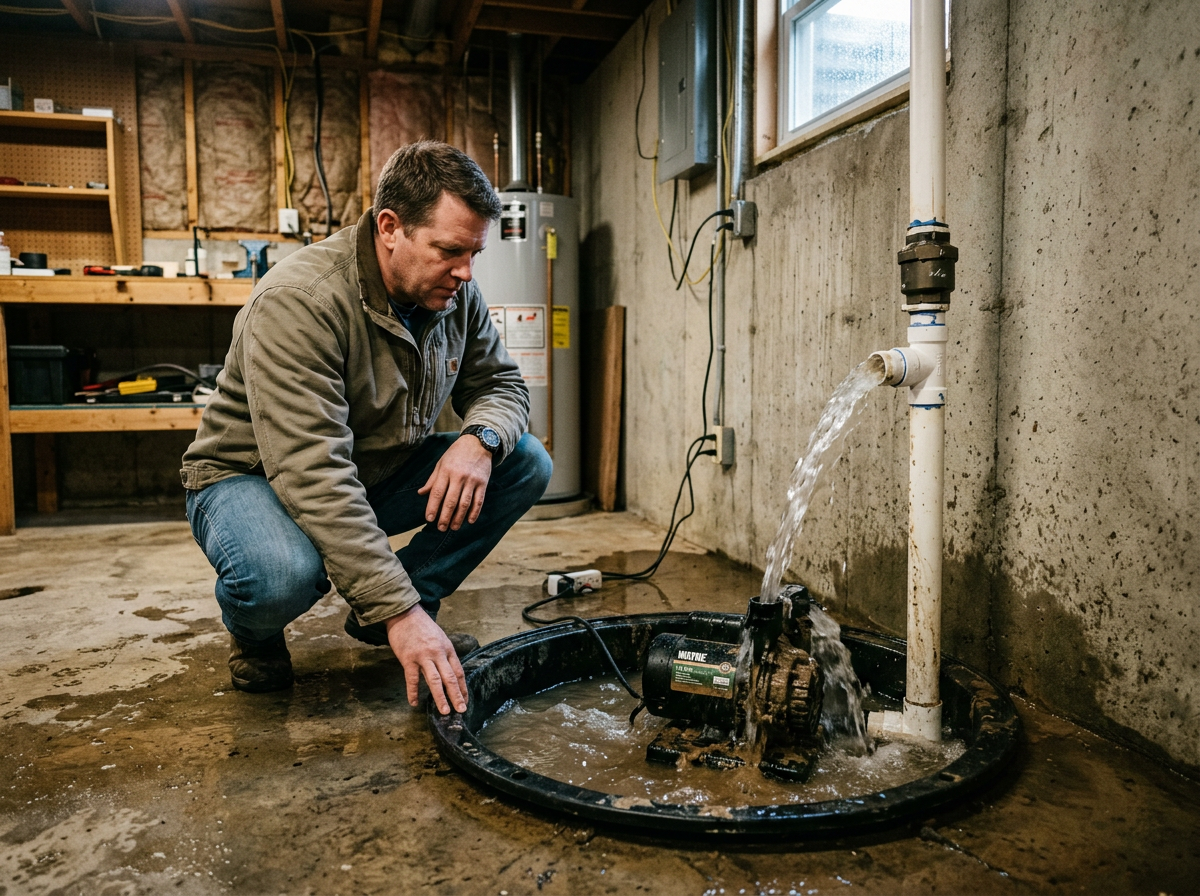
In Columbia homes a sump pump that runs constantly usually means either continuous water inflow from Boone County's clay-heavy soils or a failing float switch that no longer shuts the unit off after the pit drains. This pattern shows up often in older basements near the University of Missouri and in The District where homes built before 1970 sit on lots with limited grading. The four distinct seasons bring heavy spring rains that saturate the ground and cold winters that produce snowmelt, both pushing more water toward foundations than the pump was sized to handle. Owners in Rock Bridge and Stephens Lake areas notice the same nonstop cycling after prolonged humidity in summer when evaporation slows and soil stays saturated longer.
High Groundwater and Local Soil Conditions
Columbia sits in Boone County where dense clay soils limit natural drainage and keep water pooled around foundations for days after storms. Homes in East Campus and West Campus frequently experience this because many lots slope toward the house rather than away from it. When the water table rises the sump pit refills within minutes of the pump emptying it, so the motor stays engaged. This differs from Jefferson City properties where limestone bedrock sometimes channels water differently. Checking the discharge line for proper routing away from the foundation often reveals whether the constant run stems from recycled water re-entering the pit. In these conditions a standard 1/3-horsepower unit may cycle every 30 seconds instead of the normal 2–3 minutes during peak wet periods.
Float Switch and Mechanical Failures
A stuck or misadjusted float switch ranks as the next most common reason for nonstop operation in Columbia basements. Over time debris from the pit or corrosion on the switch arm prevents it from dropping when water levels fall. In older homes around the Boone County Courthouse area the original switches often last only 5–7 years before this failure occurs. Testing involves lifting the float by hand to see if the pump stops; if it keeps running the switch needs replacement. Wiring issues inside the pit can also keep the motor energized even when the float moves freely. These repairs usually take under an hour once the pit is accessed and prevent the motor from overheating during extended wet spells.
Seasonal Weather Patterns in Mid-Missouri
Columbia's warm humid summers and cold winters directly affect how often sump pumps run. Spring and fall rains can deliver 2–4 inches in a single event, overwhelming systems that were adequate during drier years. Snowmelt in late winter adds another surge that lasts several days in neighborhoods like Stephens Lake. Homeowners who notice constant running only after these events can link the behavior to inflow volume rather than a component failure. Installing a battery backup sump pump helps during power outages that often accompany these storms, and the linked article Battery Backup Sump Pumps: Are They Worth It in Mid-Missouri? explains sizing for local conditions.
Checking for Plumbing Leaks and Discharge Problems
Sometimes the water entering the pit comes from inside the house rather than outside groundwater. Leaking water heaters, washing machines, or foundation cracks allow steady drips that keep the pump engaged. In Downtown Columbia properties with shared walls or tight lots, discharge lines that empty too close to the foundation recycle the same water. Extending the line 10–15 feet and adding a splash block or pop-up emitter stops the loop. Routine sump pump maintenance and inspection catches these issues before they turn into constant cycling or motor burnout.
When Constant Running Signals the Need for Repair
If the pump has run nonstop for more than 48 hours the motor risks early failure, especially on units already 8–12 years old. Columbia residents in Rock Bridge and Ashland often schedule sump pump repair at this point to avoid emergency calls during the next heavy rain. A technician can measure actual cycle times, test the check valve, and determine whether the existing pump handles current inflow volumes. When repairs no longer restore normal 2–3 minute cycles, replacement with a properly sized unit becomes the practical next step to protect the basement through Missouri's wet seasons.